Obstacle Course Components
Obstacle course components add an element of challenge, excitement, and functional fitness to public parks, schoolyards, and recreational areas. Whether designed for youth agility training, adult boot camps, or family-friendly fun runs, these features help improve coordination, strength, and endurance through dynamic movement patterns.
This guide outlines common obstacle elements, design strategies, and safety considerations to build or enhance outdoor obstacle courses suitable for all age groups.
Benefits of Outdoor Obstacle Courses
- Encourages full-body movement and cross-training
- Builds strength, balance, and problem-solving skills
- Appeals to kids, teens, and adults alike
- Supports structured programming (e.g., fitness classes, events)
- Increases park engagement and repeat use

Photo from: Camelot Court Playground
Core Obstacle Elements
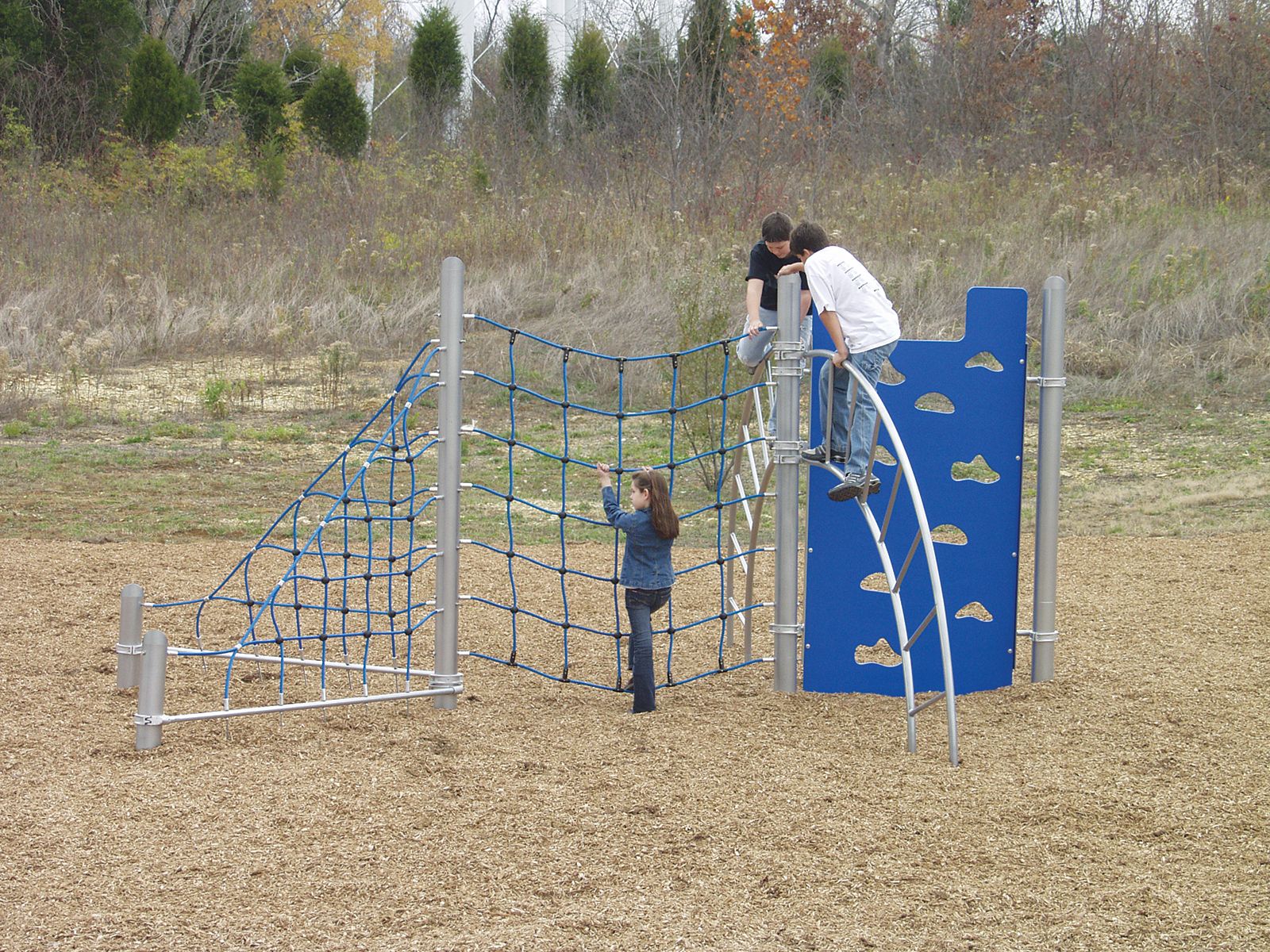
1. Climbing Walls & Nets
- Vertical or angled structures that engage upper body and core strength
- Materials: composite panels, rope nets, or wood with handholds
- Available in different heights for youth vs. adult users
2. Balance Beams & Logs
- Low-elevation components that challenge coordination and stability
- Made from steel, wood, or recycled plastic
- Can be straight, curved, or inclined
3. Tunnel Crawls
- Enclosed or semi-open crawl tubes
- Promote agility and spatial awareness
- Must include visibility and drainage holes for safety
4. Step Platforms & Podiums
- Staggered or alternating heights
- Used for jumping, coordination, or rest points
- Slip-resistant surfacing required
5. Agility Hurdles
- Adjustable or fixed-height bars for bounding drills
- Encourage speed and explosive movement
6. Monkey Bars / Traverse Rails
- Horizontal ladders that test grip strength and upper body endurance
- Can be straight, curved, or segmented for added challenge
7. Rope Climbs & Ladders
- Reinforce functional strength and vertical climbing skills
- Require fall attenuation surfacing and wide landing zones
Design Tips
- Group elements by difficulty level or movement type (climb, crawl, jump, balance)
- Allow for loop or circuit-style layouts to promote continuous use
- Design with multiple entry/exit points for accessibility
- Consider inclusive options such as hand-transfer stations or tandem balance tracks
Safety Guidelines
- Use impact-absorbing surfacing like poured-in-place rubber or engineered wood fiber
- Maintain 6–8 ft clearance zones around high-movement components
- Include clear instructional signage with difficulty labels and usage tips
- Inspect for loose hardware, wear, or splinters monthly