Playground Space Requirements
Determining the right amount of space for your playground is the first and most critical step in planning a safe and functional layout. Whether you're building for a school, community park, daycare, HOA, or residential property, understanding space requirements helps ensure compliance, safety, and an optimal user experience.
This guide explains how to calculate square footage based on age group, equipment types, and use zones, using standards from the Consumer Product Safety Commission (CPSC) and ASTM International.
🔹 Key Factors That Influence Space Needs
-
Age Group Served
- Toddlers (6–23 months) require smaller equipment and safer surfacing
- Preschoolers (2–5 years) need open play areas and shorter fall zones
- School-age children (5–12 years) use taller equipment and larger zones
-
Equipment Type
- Freestanding elements (swings, climbers) often require more space than modular systems
- Slides and swings have extended use zones for fall or motion trajectories
-
Use Zone Guidelines
- CPSC recommends 6 feet minimum use zone around most equipment
- For swings: use zone must extend twice the height of the pivot point both front and back
-
Circulation & Supervision
- Provide clear walking paths for supervision and ADA accessibility
- Avoid tight corners and blind spots in layout

Recommended Square Footage by User Volume
| Number of Children | Minimum Play Area Size | Notes |
| 10–20 | 1,000–2,000 sq ft | Good for daycare or small residential |
| 25–50 | 2,500–5,000 sq ft | Small school or HOA |
| 50–100 | 5,000–10,000 sq ft | Typical public park or elementary school |
| 100+ | 10,000+ sq ft | Multi-zoned with multiple structures |
Note: These figures are general guidelines. Always refer to CPSC 325 Handbook and ASTM F1487 for precise use zone needs based on equipment height and type.
Outdoor vs Indoor or Rooftop Playgrounds
- Outdoor Installations: Allow for larger zones and natural expansion
- Indoor or Rooftop: Must account for weight loads, wind, structural limitations, and tighter spatial design

Planning Tips
- Allow space for future expansion if possible
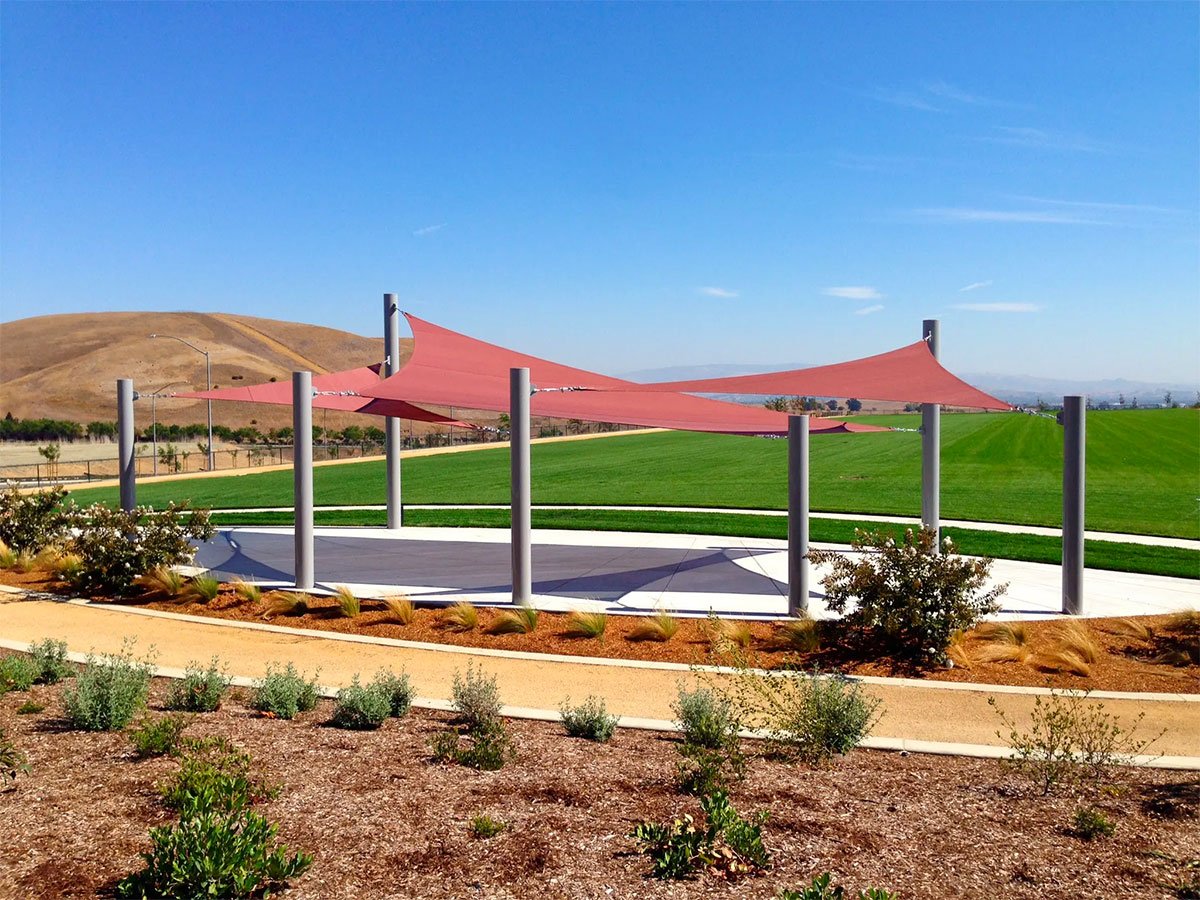
- Include site amenities in total square footage (benches, trash receptacles, shade structures)
- Ensure ADA routes are fully integrated and unobstructed
- Use natural boundaries or fencing to define play areas by age
Resources & Citations
- CPSC Playground Safety Handbook
- ASTM F1487 – Playground Equipment Standard
- NRPA Playground Design Resources