Dead Load
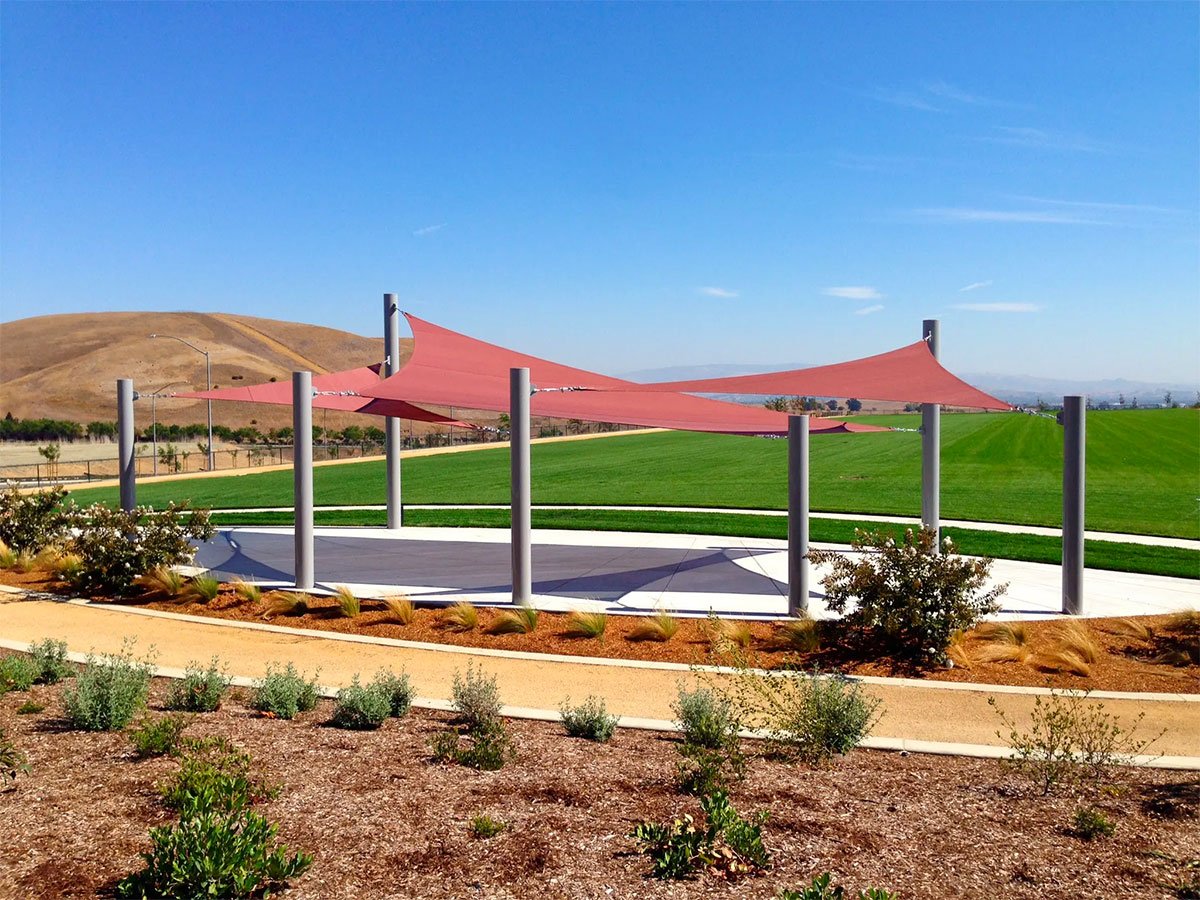
Dead load refers to the permanent, static weight of all fixed components of a structure. In the context of playground shade structures, this includes:
- The steel frame
- Fabric panels
- Bolts and anchoring hardware
- Concrete footings
Unlike live loads (e.g., people, wind, or snow), dead loads are constant and unchanging after installation.
Importance in Structural Design
Dead load is a foundational factor in:
- Determining footing depth and spread
- Selecting post and beam thickness
- Ensuring compliance with IBC and local building codes
If not properly accounted for, excess dead load can compromise the structural integrity and long-term durability of the installation.
Typical Dead Load Values
| Component | Approximate Weight |
| Steel posts & beams | 5–15 lbs per linear foot |
| Fabric canopy (HDPE) | 1–2 lbs per sq. ft. |
| Anchor bolts & hardware | Varies by system |
| Concrete footings | 150 lbs per cu. ft. |
These values will vary based on material choice, structure size, and soil conditions.

Engineering Tips
- Collaborate with a licensed structural engineer
- Incorporate soil testing to optimize footing depth
- Review manufacturer specifications for accurate weight assumptions
- Account for dead load before applying wind, snow, or live loads