Temperature Reduction
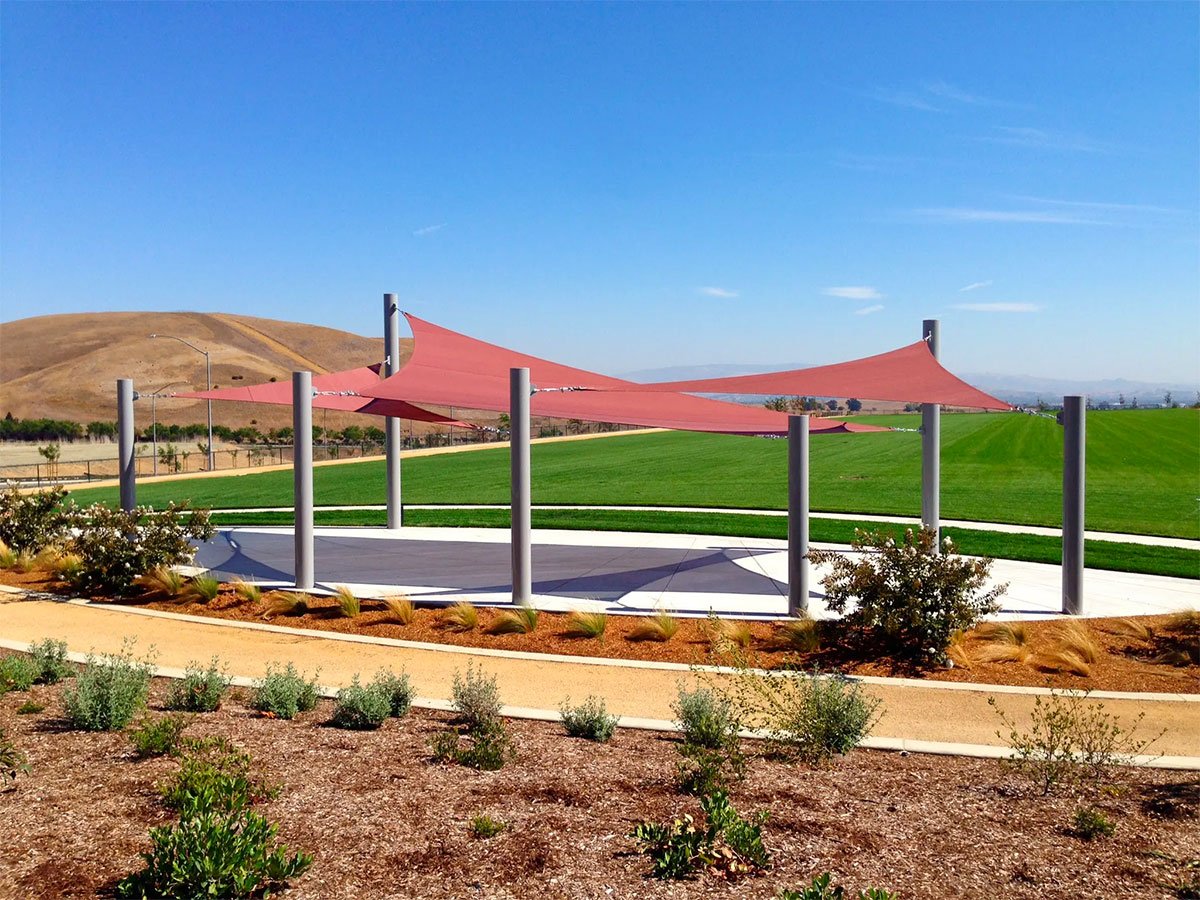
One of the most valuable benefits of installing shade structures in playgrounds, parks, and outdoor recreational areas is their ability to significantly reduce ambient and surface temperatures. Proper shade can improve safety, comfort, and equipment longevity.
How Shade Lowers Temperatures
- Blocks Solar Radiation: Shade fabric materials like high-density polyethylene (HDPE) can block up to 96% of UV rays, reducing radiant heat exposure.
- Ambient Cooling: Well-ventilated canopies create airflow, promoting evaporative cooling and reducing perceived temperatures by 10°F to 20°F (5.5°C to 11°C).
- Surface Cooling: Surfaces under shade (slides, benches, rubber surfacing) may be 30°F to 60°F (16°C to 33°C) cooler compared to unshaded areas.
- Prevention of Heat-Related Injuries: Reduced surface heat helps prevent burns from hot playground equipment during peak sun hours.
Shade Fabric & Cooling Efficiency
- Shadesure™ HDPE Fabric: Designed for high breathability and UV filtration while allowing heat to escape from under the canopy.
- Color Impact: Lighter colors reflect more sunlight and heat, while darker shades absorb more but offer stronger UV protection.
Factors That Influence Cooling
| Variable | Impact Level |
| Fabric Density | High |
| Fabric Color | Medium |
| Structure Height | Medium |
| Wind Flow | High |
| Placement/Orientation | High |

Additional Benefits
- Improves Playtime Comfort: Encourages longer outdoor use by reducing heat stress.
- Protects Users with Health Risks: Critical for children sensitive to heat or UV exposure.
- Supports ADA Accessibility: Cooler areas improve comfort for all users, including those with mobility aids or special needs.