Artificial Grass for Playgrounds
Artificial grass, also known as synthetic turf, has become an increasingly popular surfacing option for playgrounds thanks to its natural appearance, consistent performance, and low maintenance. When combined with proper padding, it offers a safe and ADA-accessible surface suitable for both residential and commercial applications.
This guide explores the benefits, construction, safety compliance, and ideal use cases of artificial turf in playground environments.
What Is Playground Artificial Grass?
Artificial grass for playgrounds is made from polyethylene or polypropylene fibers designed to look and feel like natural grass. Beneath the grass layer is a shock-absorbing pad system that meets fall height requirements, along with drainage layers to manage water runoff.

Key Benefits
- Natural Aesthetic: Mimics real grass without the mess or seasonal wear
- Safe Fall Zones: With added padding, meets ASTM F1292 for impact protection
- ADA Accessible: Smooth, stable surface supports mobility aids
- Low Maintenance: No watering, mowing, fertilizing, or reseeding required
- Durable: Withstands high foot traffic and all weather conditions
- Allergen-Free: No pollen or grass clippings
Installation Overview
- Requires a leveled and compacted sub-base (typically crushed stone)
- Padding layer (1"–2.5") installed based on equipment fall heights
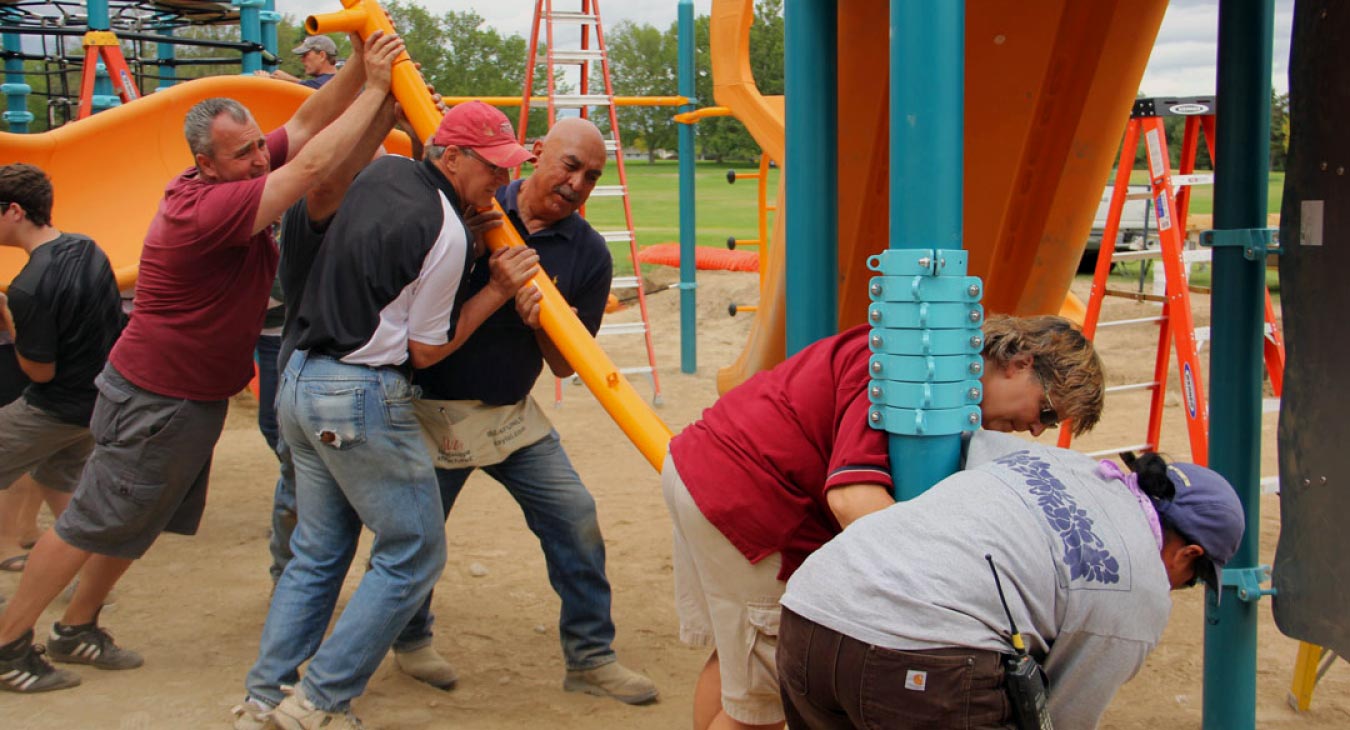
- Synthetic grass rolls are cut, laid, and joined with seam tape and adhesive
- Infill (silica sand or antimicrobial rubber granules) brushed into turf for weight and blade support
- Drainage system included for water runoff and rapid drying

Treasure Trove II AP Wooden Swing Set
Maintenance Guidelines
| Task | Frequency |
| Light debris removal | Weekly |
| Infill leveling | Monthly |
| Power broom brushing | Quarterly |
| Spot disinfecting | As needed |
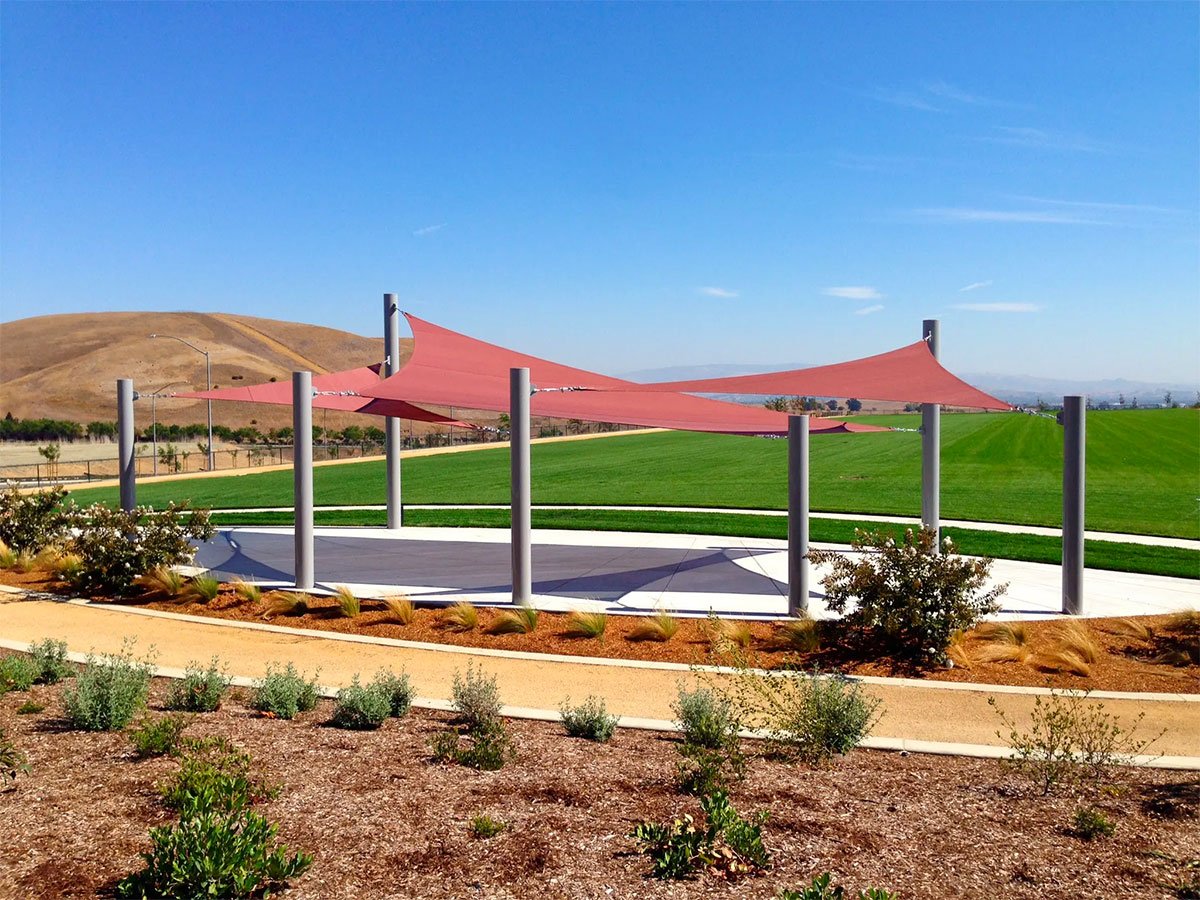
Artificial turf may get warmer than other surfaces in direct sun—shade structures or misting systems can reduce surface heat.
Safety & Compliance
- ASTM F1292: Impact attenuation with proper padding
- ASTM F1951: Wheelchair accessibility
- CPSC-recommended when installed with appropriate fall protection (CPSC Safety Handbook)
Limitations
- Higher initial investment than loose-fill surfacing
- May require periodic infill top-off or seam repairs
- Surface heat buildup in summer climates
Ideal Applications
- School or daycare playgrounds
- Rooftop and urban play areas
- Pet-friendly parks and residential yards
- Multi-use green zones combining play and passive use