Types of Water Slides
Water slides are the cornerstone of most aquatic playgrounds and waterparks. Their appeal spans across age groups and thrill preferences, making them an essential feature in commercial, municipal, and resort-based facilities.
This guide explores the main types of water slides commonly used in waterpark design and what makes each unique in terms of form, function, and experience.

1. Straight Drop Slides (Speed Slides)
Also called freefall or plunge slides, these feature a steep angle and provide a fast, thrilling descent. They’re often the tallest structures in the park and built for high-adrenaline users.
Common Features:
- Minimal curves or spirals
- Short ride time
- Requires splash pool or run-out lane
Best for: Teenagers, thrill-seekers, and high-capacity rides
2. Tube Slides
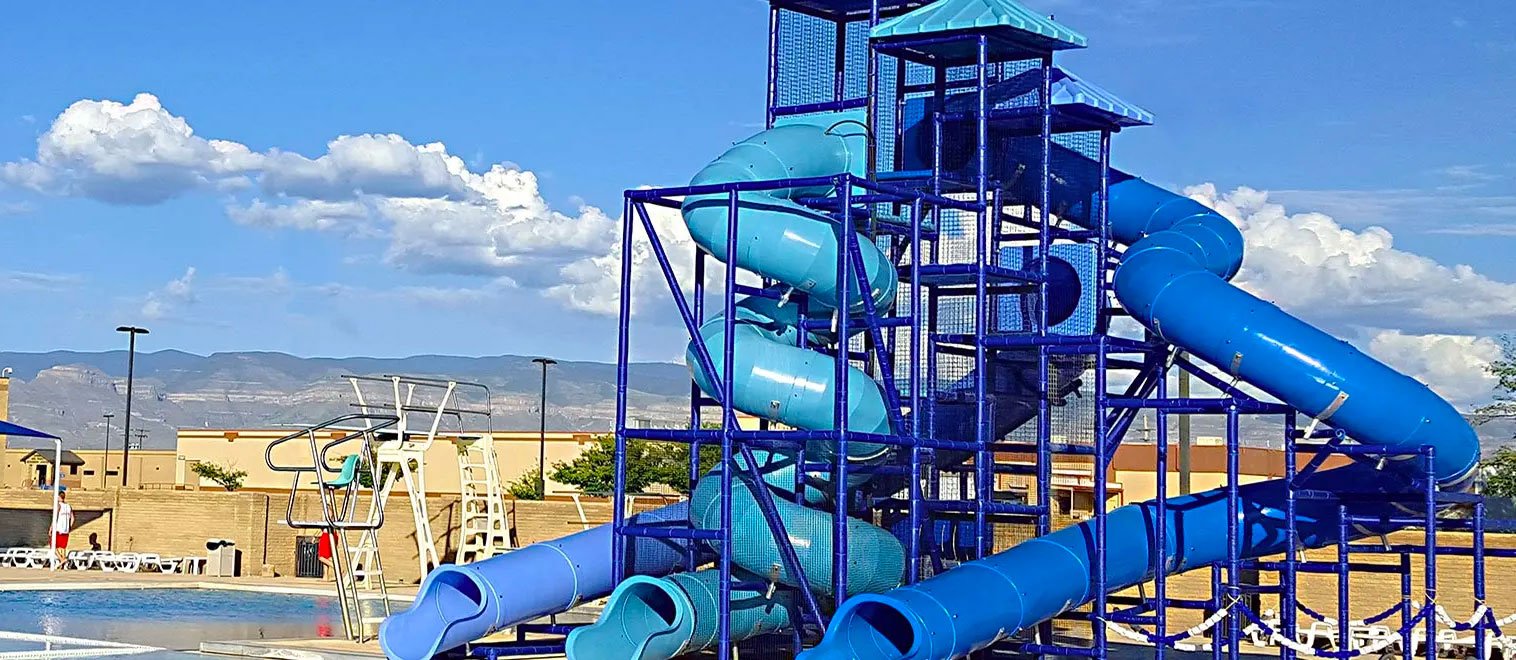
Tube slides are fully enclosed tunnels that may be straight or spiral, with single or double rider tubes. Their enclosed nature makes them safer and more suspenseful, enhancing sensory experience.
Variations include:
- Dark or “black hole” slides
- Light-show tubes with translucent panels
- Inflatable or hard-shell tubes
Best for: Family parks, indoor waterparks, sensory-rich environments
3. Body Slides
Riders descend without a tube, usually in a seated or lying position. These can be open-flume (no cover) or enclosed. They’re easier to maintain and ideal for all ages when built to appropriate height/slope.
Types:
- Spiral body slides
- Dual-lane racing body slides
- Wavy or serpentine configurations
Best for: Budget-conscious installations and general recreational use
4. Drop Slides
At the end of these slides, riders are launched into a deep pool from a short freefall drop. This adds a splashy thrill without requiring a tall structure.
Design Considerations:
- Minimum 5–6 ft pool depth required
- Often installed at swimming pool edges
Best for: Smaller waterparks, hotel pools, lake-based rec areas
5. Multi-Lane Racer Slides
Designed for competitive play, these slides let multiple users race down parallel lanes simultaneously. Riders usually lie face-first on foam mats.
Key Features:
- Timed racing lanes
- Foam launch pads
- Scoreboards or timers (optional)
Best for: Camps, school programs, high-throughput facilities
6. Bowl Slides (Space Bowl or Toilet Bowl)
Riders enter a circular bowl after a fast descent, swirling around until they exit through a central hole into a pool. They offer visual appeal and exciting physics-based motion.
Requirements:
- Larger footprint
- High water flow rate
- Drainage and splash safety precautions
Best for: Iconic centerpiece attractions in larger waterparks
7. Raft Slides & Family Slides
Designed for multiple riders in large inflatable rafts, these slides have wider flumes and gentle slopes, often with tunnels, drops, or enclosed segments.
Ideal for:
- Group interaction
- Family-oriented parks
- ADA-compliant entry platforms
8. Aqua Coasters / Water Roller Coasters
These slides integrate conveyor belts or water jets to propel riders uphill as well as down, combining the thrill of a roller coaster with aquatic fun.
Engineering Needs:
- More complex mechanical systems
- Higher upfront costs
- Structural support for elevation changes
Best for: Destination waterparks or resorts
Final Considerations
When selecting water slide types for a project, factor in:
- Target age group and thrill level
- Available space and budget
- Water flow and filtration system
- Compliance with safety codes and ASTM standards