UV & Chlorine Resistant Materials for Waterpark Equipment
Waterparks operate under intense environmental conditions—prolonged sun exposure, high humidity, and constant chemical contact. Using UV- and chlorine-resistant materials is essential for maintaining durability, safety, and aesthetics.

Why Resistance Matters
Waterpark environments subject materials to:
- Continuous sunlight → causing fading, warping, and material fatigue.
- Chlorine and other chemicals → leading to corrosion, brittleness, and surface degradation.
Selecting the right materials ensures:
- Long-term color retention
- Surface integrity
- Reduced replacement costs
- Lower maintenance frequency
Common UV-Resistant Materials
1. High-Density Polyethylene (HDPE)
- Non-toxic, weather-resistant, and UV-stabilized
- Won’t splinter or crack under sun or moisture
- Ideal for panels, slides, and barrier walls
2. Powder-Coated Steel
- Polyester-based powder coats with UV inhibitors
- High resistance to sun fading and chipping
- Common in structural frames and railings
3. Fiberglass Reinforced Plastics (FRP)
- Often used in slides and tubes
- Can be layered with gel coats that block UV rays
- Resistant to both chlorine and saltwater environments
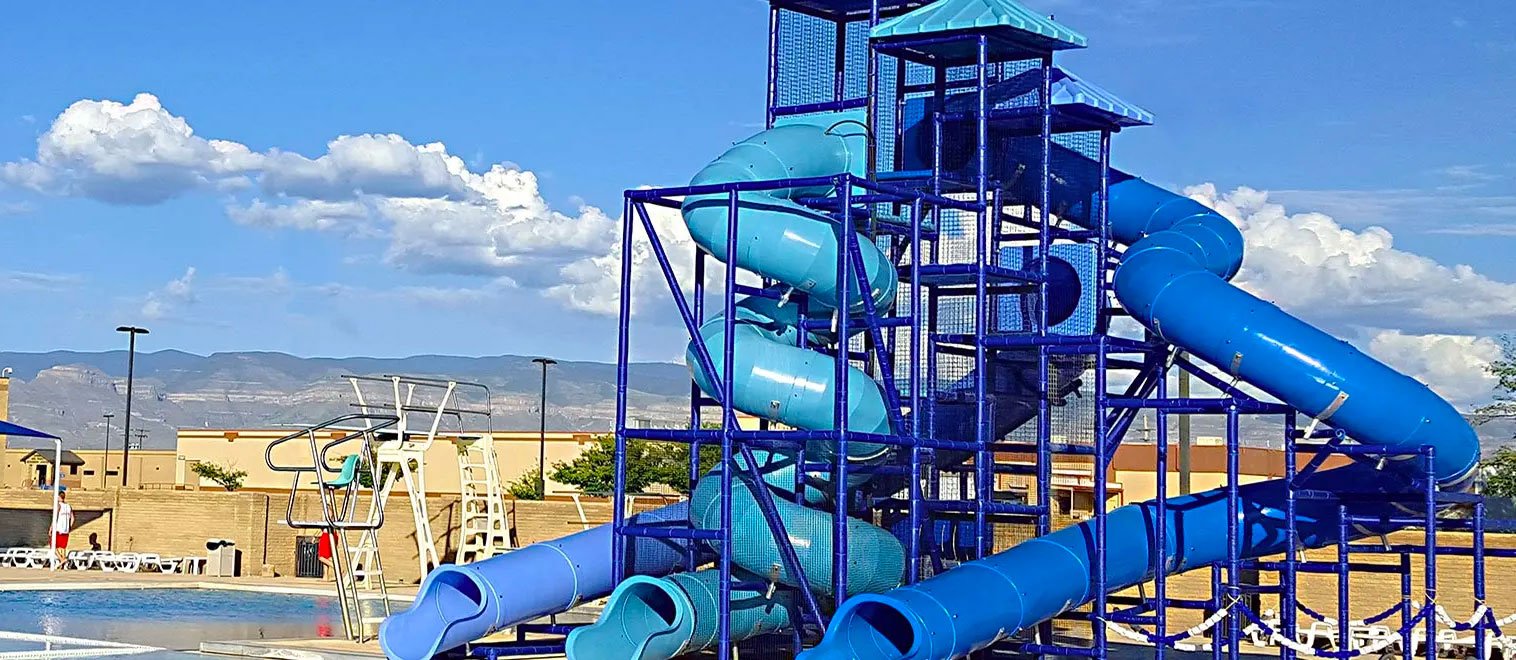
Fiberglass Reinforced Plastics (FRP) are often used in water slides and tubes, layered with gel coats that block UV rays and resist both chlorine and saltwater.
Chlorine-Resistant Components
| Component | Chlorine Resistance Notes |
| PVC Piping | Ideal for plumbing; won’t corrode or weaken |
| Marine-Grade Stainless Steel (316) | Excellent corrosion resistance in chlorinated water |
| Rubber Seals/Gaskets | Use EPDM-based seals; better against chemical breakdown |
Maintenance Tips
- Use non-abrasive, pH-neutral cleaners to prevent surface breakdown.
- Rinse exposed surfaces regularly to reduce chemical buildup.
- Reapply UV sealants or protective coatings as needed (especially for fiberglass).
Design Considerations
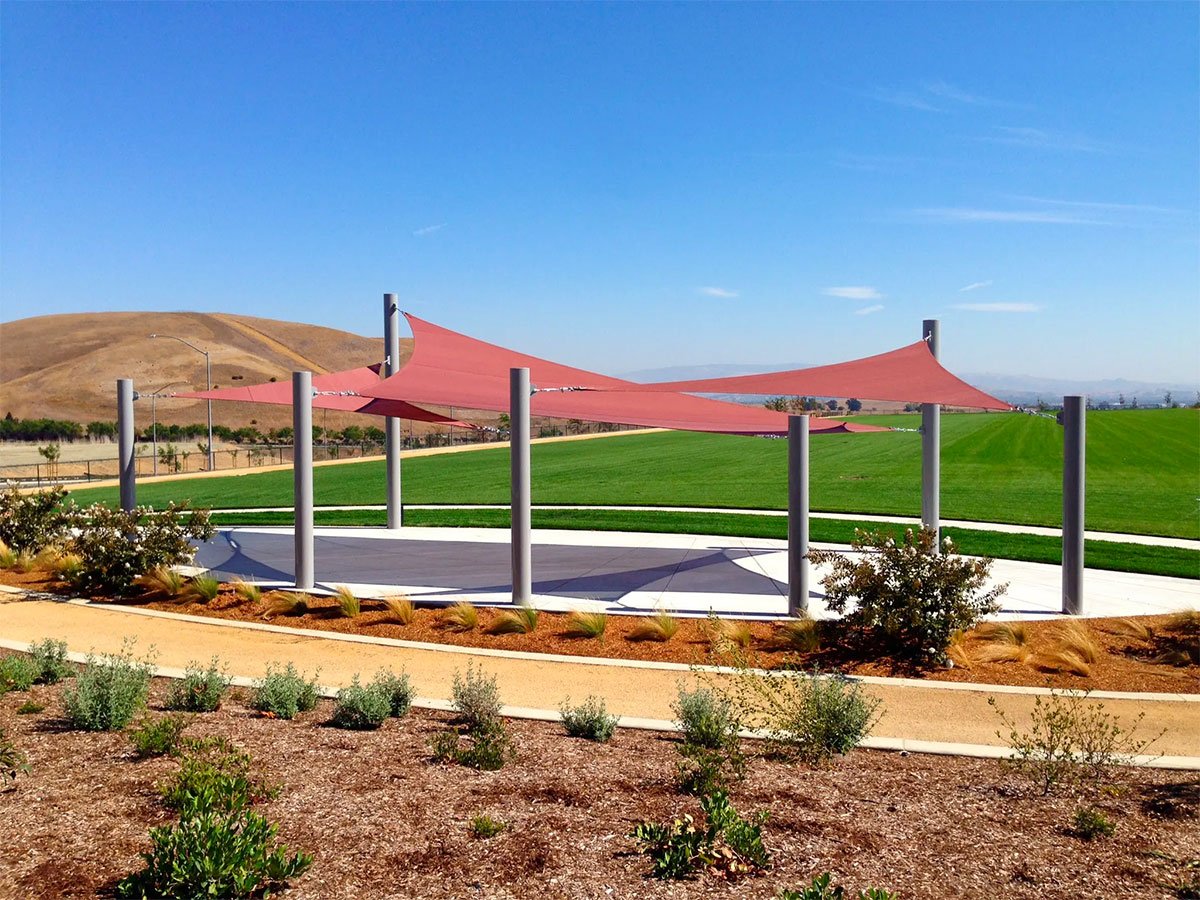
- Shade integration: Strategic placement of sails and canopies can extend material lifespan.
- Color selection: Darker pigments fade faster; choose lighter tones for high-exposure zones.
- Material pairings: Avoid combining dissimilar metals that can cause galvanic corrosion.