Shade Structure Types
Choosing the right shade structure is critical for ensuring sun protection, aesthetic appeal, and structural performance across playgrounds, parks, and recreational environments. This guide introduces the four most common shade structure types used in commercial and residential settings.
Use the links below to explore each type in detail:
Hip Shade
Hip shades feature a four-post design with a sloped roof, offering simple geometry and excellent shade coverage. Their structure is ideal for playgrounds, picnic areas, and outdoor classrooms due to the ease of installation and symmetrical coverage.

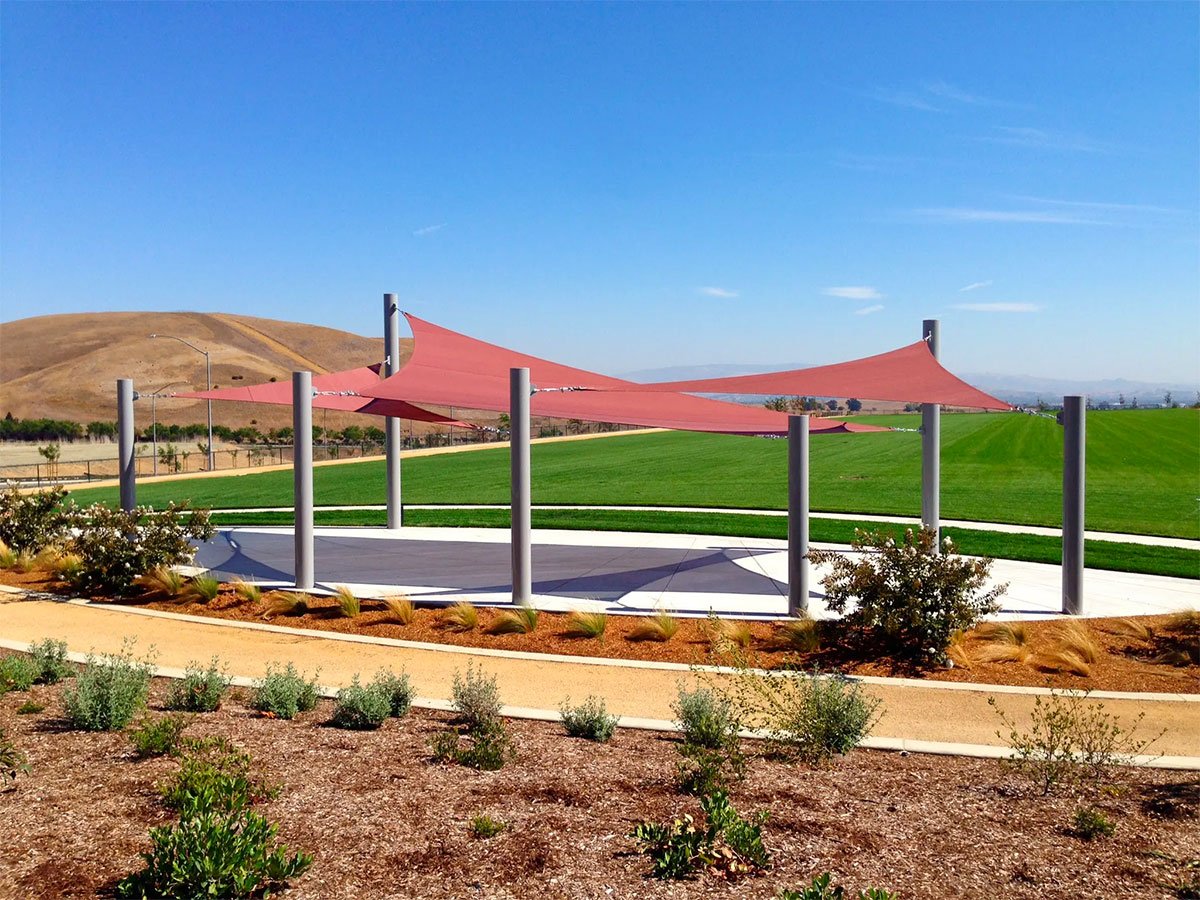
Sail Shade
Sail shades are tensioned fabric structures anchored at multiple height points, creating an architectural, modern look. They allow for flexible configurations and can cover irregular spaces with dramatic overlapping designs.

Photo from WillyGoat
Rotating Shade
Rotating shades incorporate a central post and a pivoting canopy, enabling the structure to rotate and track the sun’s path for optimal coverage throughout the day. These are often used for tables, splash pads, and dynamic recreational spaces.

Cantilever Shade
Cantilever shades provide unobstructed space underneath by supporting the canopy with posts on only one side. This makes them ideal for bleachers, benches, poolside lounges, or walkways where foot traffic and sightlines must remain clear.

Photo from WillyGoat