Pavilions and Shelters
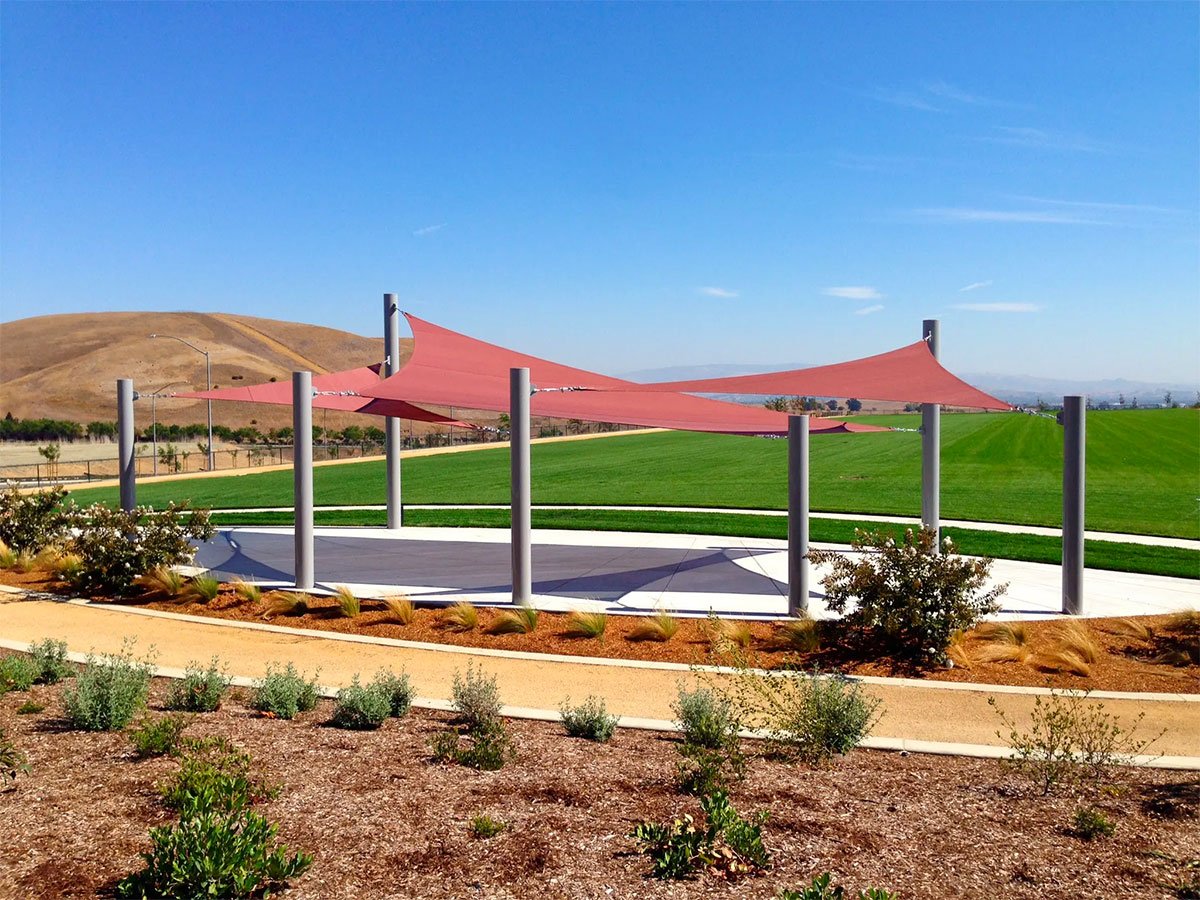
Pavilions and shelters are critical components of well-designed recreational areas, offering protection from sun, rain, and wind while supporting gatherings, picnics, special events, and year-round usability. These structures enhance comfort, encourage longer stays, and add visual and architectural appeal to playgrounds, parks, and other community spaces.
This guide provides a comprehensive overview of pavilion and shelter types, materials, installation guidelines, ADA considerations, and maintenance practices for residential and commercial use.
Benefits of Pavilions in Play Areas
Pavilions and shelters:
- Provide shade and weather protection
- Support seating, food service, and event hosting
- Define designated areas for rest and community engagement
- Improve accessibility and comfort for all users

Image by BrankaVV/ CC BY-SA 4.0 - Wikimedia Commons
Types of Pavilions and Shelters
1. Gable Roof Shelters
- Classic A-frame design
- Excellent rain runoff and open ventilation
- Popular in municipal and school playgrounds
2. Hip Roof Shelters
- All four sides slope downward
- Provides symmetrical shade and wind protection
- Often found in HOA parks and large public areas
3. Monoslope (Lean-to) Structures
- Single-direction roof slope
- Space-efficient; ideal for narrow areas or walkways
4. Cantilevered Shelters
- Minimal support posts with overhanging roof
- Ideal for pathways, entry areas, or modern landscapes
5. Custom or Themed Pavilions
- Designed to complement nearby play structures
- Can include decorative posts, logos, or nature-inspired elements

Materials and Finishes
| Component | Common Materials | Benefits |
| Roof Panels | Metal, polycarbonate, shingles | Weather-resistant, long-lasting |
| Structural Frame | Powder-coated steel, aluminum | Durable and rust-resistant |
| Posts & Columns | Laminated wood, steel | Aesthetic or industrial finish |
All materials should meet local building code requirements and wind/snow load standards.
Key Installation Considerations
- Place near picnic areas, playgrounds, or trail intersections
- Ensure a level concrete pad or other stable foundation
- Allow for accessibility routes compliant with ADA guidelines
- Consider lighting, power access, and drainage for larger shelters

ADA Accessibility Features
- Minimum clearance height of 80 inches
- Access to shelter must be via an accessible path with a max 5% slope
- Interior tables should allow for companion seating (see ADA Picnic Table Guidelines)
Maintenance Tips
- Inspect roofing annually for leaks or rust
- Check support beams, fasteners, and anchors for wear
- Clean debris and check for nesting pests
- Refinish wood posts or repaint metal as needed
Ideal Applications
- City and county parks
- School playgrounds and sports complexes
- Apartment and HOA common areas
- Campgrounds, trailheads, and nature centers
- Inclusive and all-weather play environments