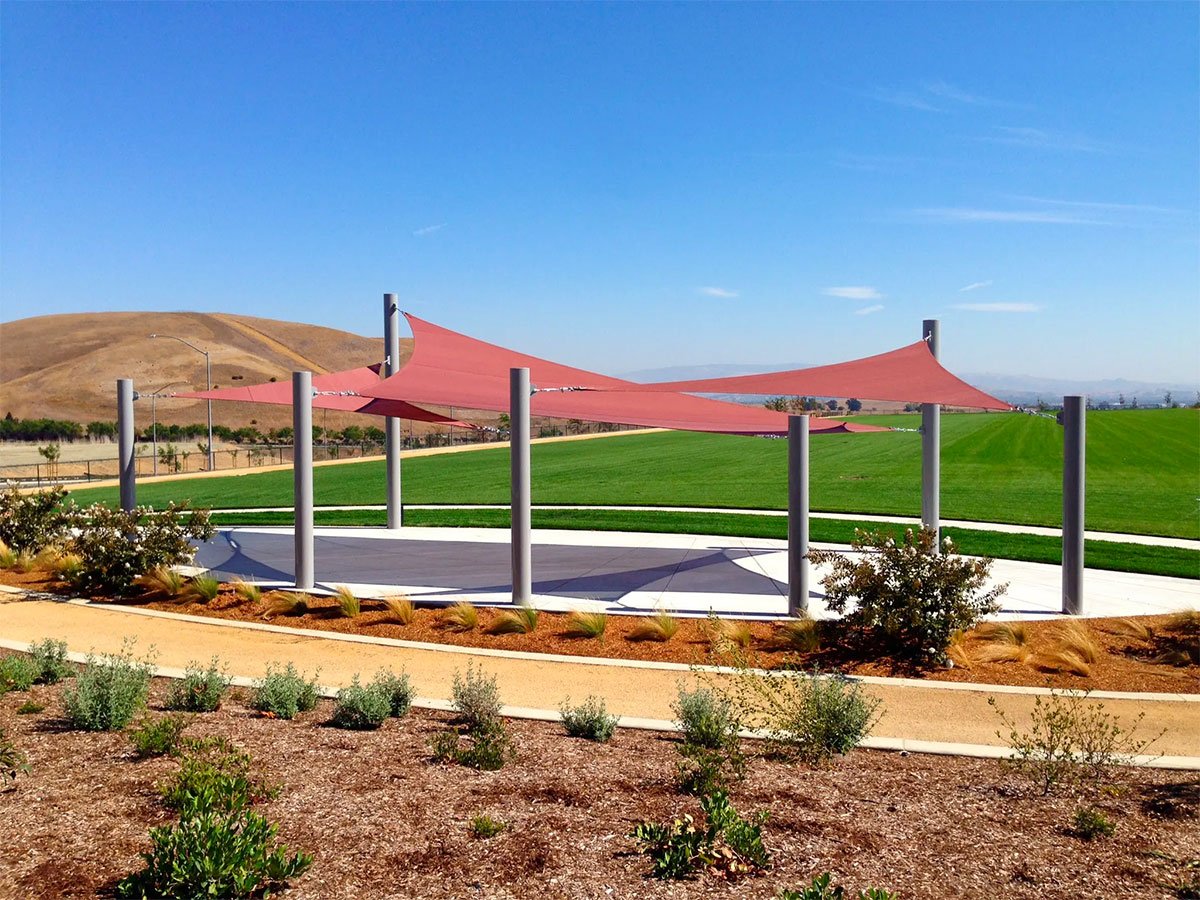
Shade Installation
Proper shade installation is critical to ensuring the long-term durability, safety, and effectiveness of any shade system in a playground or recreational environment. This process involves precise planning, site assessment, structural coordination, and adherence to local building codes.
Site Assessment & Planning
Before installation, it's essential to evaluate:
- Sun angles to determine optimal orientation
- Playground layout to avoid interfering with equipment or use zones
- Soil type and conditions for footer design
- Prevailing wind directions to assess tensioning and anchoring needs
- Accessibility and clearance for equipment and ADA pathways

Installation Phases
1. Marking and Digging Footers
- Layout is marked using engineering drawings
- Footers are dug based on structural requirements (often 24"–48" deep depending on wind/snow load)
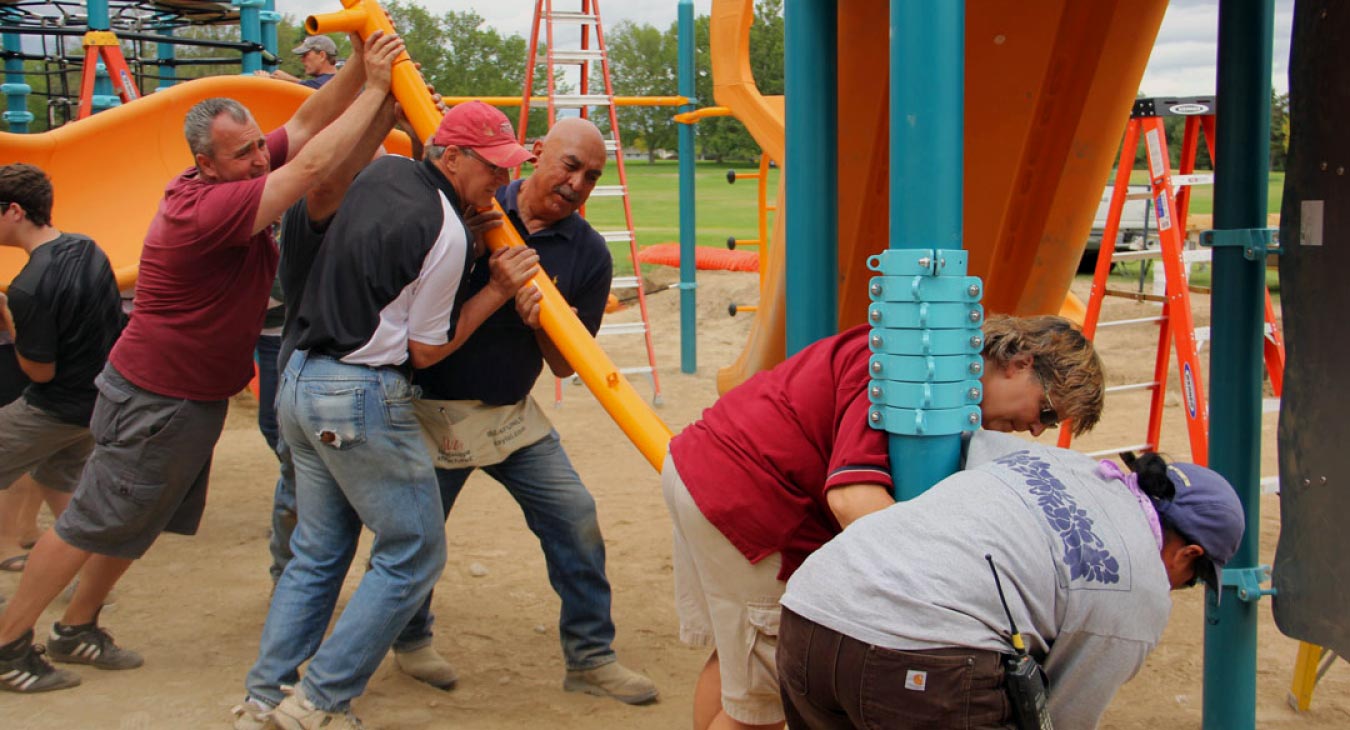
2. Setting the Posts
- Posts are aligned vertically using plumb lines or laser levels
- Concrete is poured and cured fully (typically 24–72 hours)
3. Installing the Shade Canopy
- Fabric is tensioned uniformly to prevent sagging or wind lift
- Quick-release mechanisms (if applicable) are tested for seasonal removal

Timing & Seasonality
- Ideal Season: Spring through early fall (dry, warm weather)
- Cure Time: Concrete curing may delay canopy install; schedule accordingly
- Weather Concerns: Avoid installation during high winds, storms, or freezing temperatures
Tools & Equipment
| Task | Recommended Tools |
| Footer excavation | Auger, post-hole digger, shovel |
| Post alignment | Laser level, measuring tape |
| Fabric attachment | Torque wrench, ratchets, ladders or lifts |
Code & Engineering Compliance
- Installers must follow the manufacturer’s instructions
- Engineering specs should meet or exceed ASCE 7 and local jurisdiction codes
- Anchoring systems must pass wind and snow load tests

Related Pages
Proper installation sets the foundation for a shade system that performs reliably for years. Partner with certified installers, consult with your local building department, and ensure all specifications align with project needs and environmental conditions.