Sourcing a swing set for a school, park, church, or municipal space comes down to one question: will it hold up?
The short answer is that a commercial swing set is right for your site when its per-seat and total-structure weight ratings cover your busiest crowd, it's built from powder-coated or otherwise weather-protected steel, and it's made to the ASTM F1487 standard for public playground equipment.
The weight limit is one of the most ignored specifications in commercial playground procurement, yet it touches every concern that matters: user safety, structural longevity, compliance, and maintenance costs. A number on a spec sheet won't tell you how that capacity holds up under site occupancy, seasonal exposure, and mechanical stress. This guide covers both; you can buy with confidence rather than hope for the best.
Why Swing Set Weight Limits Matter
Weight limits are the engineering foundation on which safe, responsible play equipment is built. Understanding them is the first step toward a purchase that serves your community.
Many buyers make a costly mistake by assuming a home-grade swing set with a comparable weight rating will hold up in a public setting. It won't. A school or park swing set faces rotating groups of children throughout the day, after-school programs, weekend events, and seasonal gatherings; cumulative stress that residential equipment isn't built to absorb.
Safe, continuous use starts with equipment engineered for the demands of the site.
Understanding Swing Set Weight Capacity
Swing set weight capacity refers to the amount of weight a swing or full playset is designed to support under intended use.
Manufacturer specs should clarify the intended age range, occupancy expectations, and whether the structure is rated for commercial use. A claim like “holds up to 800 lbs” may not explain how that weight is distributed across swing bays, users, or attached play components.
To assess safety and durability, evaluate weight capacity alongside the system’s overall structural endurance. Two key limits matter most.
Per-Swing Limits
Per-swing limits apply to each swing position, including the seat, chains, hangers, and attachment points. They are not the same as the frame’s total capacity.
There isn't one universal "weight limit" every commercial swing must hit. What sets commercial equipment apart is the testing behind it.
ASTM F1487, the consumer-safety performance specification for public playground equipment, defines the structural-integrity, entrapment, protrusion, and use-zone requirements a public-use structure has to pass, while the CPSC Public Playground Safety Handbook covers layout, spacing, and surfacing.
The capacity you actually compare between products is the manufacturer's rating, stated per seat and for the whole structure, and it should come from equipment built and tested to those standards, not a backyard set with a similar-sounding number.
To size that rating to your site, start with peak simultaneous use rather than the headline figure. Count the bays and seats, estimate how many will be occupied at once during your busiest window and confirm the per-seat rating covers your heaviest expected users with margin to spare. When in doubt, size up: the cost difference at purchase is far smaller than an early replacement.
Seat type matters. A belt swing used by an older child creates different load demands than a toddler bucket seat, and inclusive or adaptive seating often carries its own per-swing weight specifications. Every component in that swing bay should share a compatible rating.
Total Set Limits
Total set limits define what the entire structure can support at once, including swings, climbers, panels, and other connected elements.
This matters most in high-use settings. During recess, after-school care, or community events, several children may use the structure simultaneously, creating far more stress than a single-user scenario.
Choosing a swing set that balances weight capacity and long-term durability is essential for safe, years-long fun. Compare these three top-rated options from WillyGoat to find the perfect fit for your space.
|
#1 The Heavy-Duty Champion |
#2 The Inclusive Choice |
#3 The Budget-Friendly Classic |
|---|---|---|
 |
 |
 |
|
★★★★☆ |
★★★★☆ |
★★★★☆ |
|
Heavy Duty Arch Swing Set |
Heavy Duty ADA Swing Set |
Single Post Swing Set |
|
|
|
Key Factors That Affect Swing Set Durability
For procurement teams defending a purchase to a board, durability is also a financial argument. Here's what determines whether a playset earns its place on your site.
Materials
Playset materials set the baseline for structural strength, maintenance frequency, weather performance, and realistic service life. No single material fits every installation. The best choice depends on use intensity, climate, maintenance capacity, and long-term site goals; use the comparison below as a starting point.
|
Material |
Durability |
Maintenance Level |
Weather Resistance |
Commercial Suitability |
|---|---|---|---|---|
|
Wood |
Moderate |
High |
Low-Moderate |
Selective (aesthetic-priority sites) |
|
Metal |
High |
Low |
High (with coating) |
Excellent (most commercial sites) |
|
Plastic |
Low-Moderate |
Minimal |
Moderate |
Limited (components only) |
Wood offers a natural look that works well in parks, nature-themed spaces, church playgrounds, and community gardens, but it requires regular upkeep to manage moisture, splintering, cracking, insects, and finish wear.
Metal is the strongest fit for most commercial playgrounds because it offers high durability, low maintenance, and reliable performance in heavy-use environments, especially when powder-coated or otherwise weather-protected.
Plastic is best used for components such as seats, panels, and select play features. It resists rot and corrosion and requires little upkeep, but lower-grade plastics may fade, crack, or become brittle with prolonged UV exposure and temperature swings.
Frame Design and Support
A frame’s material matters, but its engineering matters just as much. Post sizing, cross-bracing, top rail strength, and overall geometry determine how well the structure handles repeated swinging forces over time.
Strong frame design reduces stress at high-movement connection points, such as where posts meet rails or hangers attach to the top bar. Look for broad base footprints, reinforced joints, and load distribution built for commercial use.
These are visible signs of equipment designed for durable playground swings in demanding environments.
Hardware, Seats, and Attachments
The frame gets the attention, but hardware is often what fails first.
Chains, hangers, bolts, bushings, connectors, and seats should all be rated for repeated commercial use. One underbuilt or mismatched connector can lower the capacity of an entire swing position, even if the frame itself is strong.
Look for corrosion-resistant hardware, tamper-resistant fasteners, and attachment systems built for public settings. Also ask about replacement-part availability upfront; sourcing chains or hangers years later should not become a maintenance headache.
Weather Resistance
Outdoor conditions put constant pressure on playground equipment. Sun exposure can degrade coatings, moisture accelerates corrosion, freeze-thaw cycles stress joints, and coastal salt air creates additional surface challenges.
Match materials and finishes to your local climate. UV-resistant coatings, rust-resistant finishes, and moisture-tolerant materials are not extras; they are baseline requirements for reliable long-term performance.
A finish suited for dry inland conditions may fail quickly in a humid coastal environment, turning a long-term investment into a recurring repair issue.
Installation and Anchoring
Even a well-built swing set can underperform if it is poorly installed. Proper anchoring allows the equipment to perform to its rated capacity over years of use.
Soil conditions, drainage, surfacing type, and site preparation all affect long-term stability. A poorly anchored frame can shift under load, accelerate joint wear, and create inspection or safety concerns.
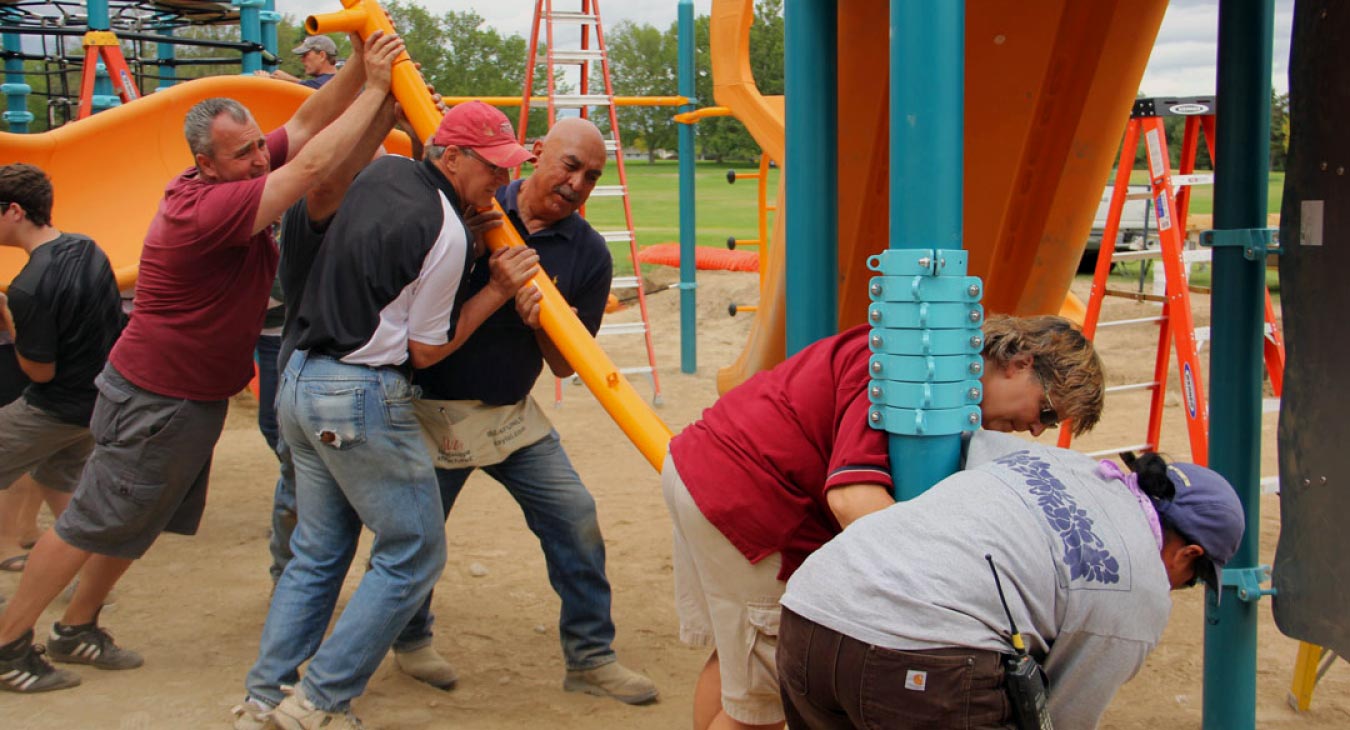
Professional installation is the safest choice for buyers who need documented confidence in durability, safety, and compliance. WillyGoat’s nationwide setup network covers the contiguous U.S., allowing buyers to source equipment and anchoring through one accountable partner.
Maintenance Needs
Every commercial swing set needs regular maintenance. Skipping routine upkeep does not save money; it usually turns small issues into larger, more expensive repairs.
High-use sites should document inspections for loose hardware, chain and hanger wear, seat condition, coating damage, corrosion, and anchor stability after seasonal weather changes.
Routine upkeep protects the equipment’s lifespan and reduces the risk of unexpected closures or early replacement.
Signs a Swing Set Needs Repair or Replacement
Not every sign of wear requires closing a swing set, but structural issues should never be treated as “wait and see.” Cosmetic wear, like minor paint chips, small scratches, or surface discoloration, can often be handled with spot treatment or refinishing.
Take the equipment out of use and address it promptly if you notice:
- Rust that has advanced to pitting or flaking
- Cracks or fractures in posts, rails, or connection points
- Bent structural members
- Loose, shifting, or damaged anchors
- Frayed, kinked, or worn chains
- Damaged or deteriorating seats
- Instability during normal use
- Repeated hardware failures across inspection cycles
- Progressive frame movement or connection-point fatigue
When these issues appear, the decision may move beyond what needs to be repaired to whether replacement is a safer option. Keep a repair and inspection log to support those decisions. A clear record helps justify repairs, identify recurring problems, and provide a defensible basis for replacement when the structure is nearing the end of its safe service life.
Find Durable Swing Sets at WillyGoat
We have spent over 25 years supplying commercial playground equipment to schools, parks, churches, HOAs, daycares, and municipalities across the country. That experience shows up in the specifics: institutional-grade materials, safety-minded engineering, transparent product information, and a team that answers questions without turning every conversation into a sales event.
Every factor covered in this guide reflects how WillyGoat approaches product development and buyer support. The catalog is extensive and is available to purchase online without a quote-only process.
For time-sensitive procurement decisions, direct access is a clear advantage over traditional suppliers who make you wait weeks for a callback. Professional installation is available through WillyGoat's nationwide network across the contiguous U.S., so the path from product selection to a site-ready, anchored playset stays with one partner from the first conversation to the final anchor bolt.
Ready to find a commercial swing set built for the way your community plays? Browse our commercial swing sets or connect with the team; getting the right equipment sorted from day one is how we work.