
Buying a commercial playground slide comes down to matching the slide to your users and your site.
The short version by type: straight slides for budget- or space-limited sites and mixed ages, wave slides for elementary-age fun, spiral slides where floor space is tight but you want high play value, tube slides for taller structures and older children, and scoop or toddler slides for ages 2–5.
From there, match the slide's height and surfacing to the age group that will use it most, and confirm you have the clearance to install it safely. Getting there means working through five decision areas: slide types, age-fit, safety features, space planning, and installation and maintenance.
This guide walks schools, churches, HOAs, parks departments, and community organizations through each one.
Types of Playground Slides to Consider
No single slide fits every project. The right choice depends on user age, footprint, traffic volume, supervision needs, and the play experience you want to create. Slide selection also ties into structure planning, including deck height, fall-zone surfacing, and visibility.
Straight Slides
Straight slides are a classic, practical choice. They're easy to install, space-efficient, low-maintenance, and suitable for a wide age range. They work well with lower deck heights and integrate easily into modular systems, making them a good starting point for budget-conscious or space-limited projects like schools, churches, and smaller parks.
Wave Slides
Wave slides add movement and sensory interest without the complexity of enclosed designs. Their rolling surface creates a more dynamic ride, especially for elementary-age children, while adding visual appeal without a major cost increase.
Before choosing one, consider rider comfort across ages and sizes, slide material quality, and how the wave shape affects speed and ride length.
Spiral Slides
Spiral slides are a strong option when space is limited. By wrapping the descent around the structure, they deliver a bigger experience in a compact footprint.
They also create a standout feature that encourages repeat play. Keep in mind that sight lines are more limited, younger children may need help with curved entries, and platform transitions should feel secure and intuitive.
Tube Slides
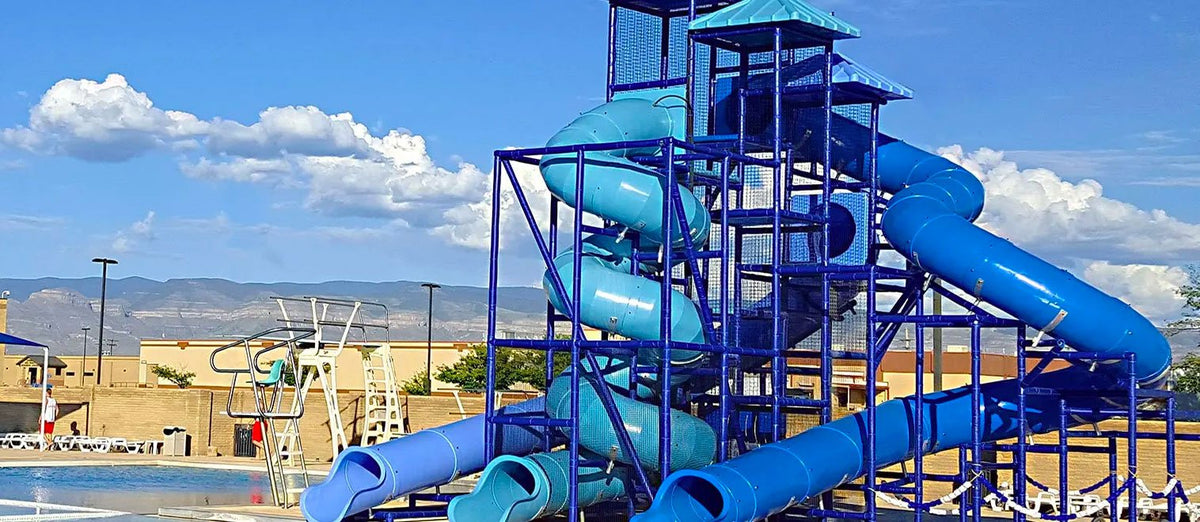
Tube slides offer an enclosed, adventurous ride that works well on taller structures. They add visual impact, extend the sense of descent, and are often popular with older elementary-age children.
In sunny climates, material selection and ventilation are especially important since enclosed slides can retain heat. Supervision planning should also account for limited internal visibility and clear monitoring at entry and exit points.
Scoop and Toddler Slides
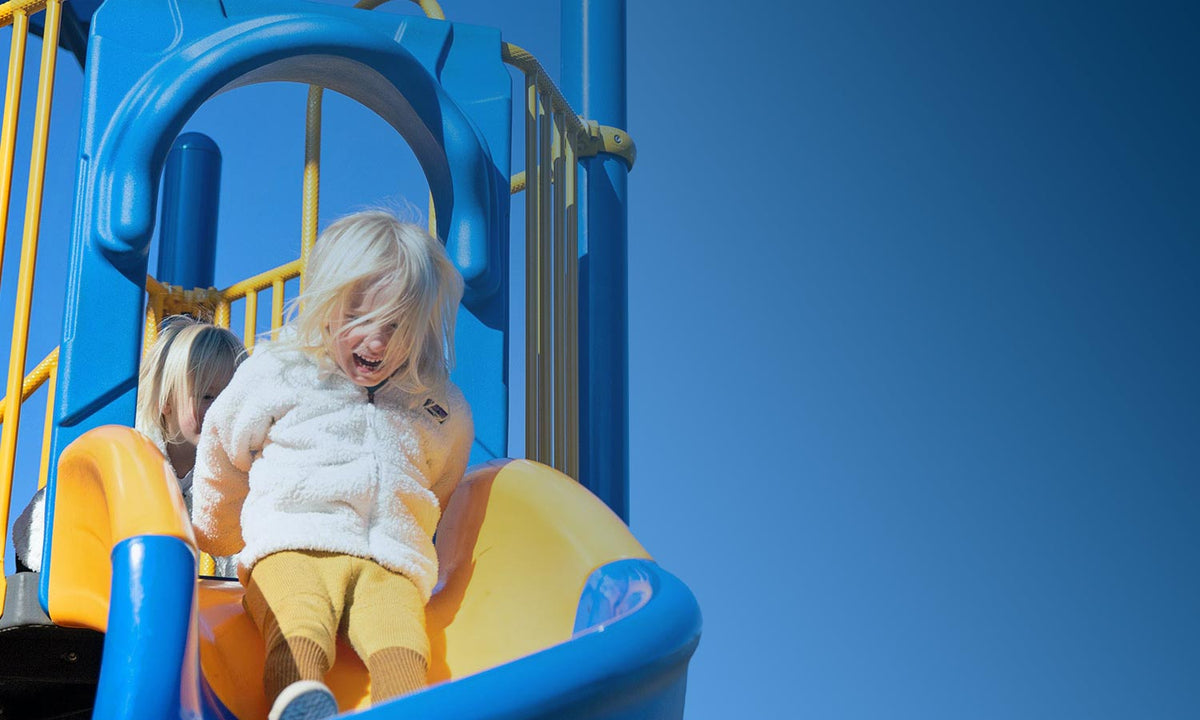
Scoop and toddler slides are designed for young children, with low deck heights, gentle slopes, and simple entry points that build confidence and support early motor development. They’re a strong fit for daycares, Montessori programs, preschools, and inclusive play areas.
For sites serving ages 2–5, this isn’t an add-on category; it’s the right developmental choice. Style matters, but age-fit should lead the decision.
Slide Type Comparison at a Glance
|
Slide Type |
Best Age Range |
Space Footprint |
Supervision Level |
Ideal Setting |
|---|---|---|---|---|
|
Straight |
2-12+ |
Small |
Low |
Schools, churches, smaller parks |
|
Wave |
5-12 |
Moderate |
Low Moderate |
Larger play systems, parks |
|
Spiral |
5-12+ |
Small (vertical) |
Moderate |
Commercial sites, space-limited areas |
|
Tube |
6-12+ |
Moderate Large |
Moderate High |
Tall structures, high-traffic parks |
|
Scoop/Toddler |
2-5 |
Small |
Moderate |
Daycares, preschools, inclusive areas |
Choosing the Best Slide for Your Child’s Age
Choosing the right slide starts with one question: who will use it every day? Age affects deck height, slide length, entry style, supervision needs, and the right level of challenge.
CPSC ties slide complexity to age in a way worth designing to, especially for spiral slides: spiral slides of less than 360° suit toddlers (6–23 months), spirals of up to 360° (one full turn) suit preschoolers (2–5 years), and spirals with more than one 360° turn are appropriate for school-age children (5–12 years) (CPSC Handbook, Table 1).
Use CPSC's three age bands as the references and consider the recommendations below:
- Ages 2–5: Toddlers and preschoolers need low deck heights, gentle slopes, and easy entry points. Scoop and toddler slides offer the right mix of safety, confidence-building, and motor-skill support. Supervision is essential, and the equipment should support that through simple, intentional design.
- Ages 5–9: Early elementary-age children are ready for more challenges. Moderate deck heights, straight slides, wave slides, and some spiral slides can work well depending on the site, budget, and supervision plan. This age group responds well to variety, speed, and layouts that feel exciting without becoming risky.
- Ages 9–12+: Older children often prefer taller structures, tube slides, and more adventurous configurations. At this stage, the slide should feel like an experience, not just a way down.
- Mixed-age sites: Parks, schools, and community playgrounds may need separate play zones or structures designed for different developmental stages. The goal is to serve each age group safely without one crowding out another.
Even the best age-aligned slide should still pass a full safety review before purchase.
|
#1 The Enclosed Thrill |
#2 The Whirlwind Ride |
#3 The Budget‑Friendly Classic |
|---|---|---|
 |
 |
 |
|
Straight Tube Slide 6 Foot Deck
|
8 Foot Sectional Freestanding Spiral
|
Single Piece Straight Slide 6 Foot Deck
|
Key Safety Features to Look For
Before committing to any slide purchase, new or used, every buyer should run through a safety checklist to reduce preventable risk and extend equipment life through informed buying. Four specific features deserve attention in every decision.
Safe Slide Height and Slope
Deck height and slope determine ride speed, comfort, and safe exit, but the relationship isn’t always obvious. A taller platform makes for a faster slide. What's a fun ride for a 10-year-old can be too fast for a 6-year-old, so it's worth matching slide height to the age group using the equipment.
For commercial play spaces, match slide geometry to platform height and the primary user age range.
Sturdy Handrails and Entry Points
Climbing onto the slide is the trickiest part of the ride for a young child. Secure entry points, grip-friendly handrails, clear positioning cues, and enough staging space help children sit, align, and descend safely.
Good entry design also reduces crowding at the top of the structure, which is especially important for younger users and high-traffic school or park installations.
Smooth Edges and Quality Construction
Material quality and finished work directly affect safety and durability. Smooth seams, precise edges, secure fasteners, and strong protective coatings reduce abrasion risks and help equipment withstand heavy use.
When comparing metal and plastic slide construction, look beyond price. Check finish quality, joint execution, UV resistance, and high-wear areas. For used equipment, inspect carefully; deteriorated coatings or exposed hardware can create hazards that aren’t obvious at first glance.
Material choice is also a heat decision. CPSC advises against bare metal for slide chutes and platforms in direct sun, because exposed metal can reach contact-burn temperatures; shaded siting, coated surfaces, or plastic chutes reduce that risk. It's the same reason enclosed tube slides need attention in sunny climates, they hold heat, so factor sun exposure and material together.
Proper Surfacing Under the Slide
Surfacing is a fundamental component of safety, not an optional budget item to sort out after the equipment arrives. The fall zone beneath and around a slide must meet code depth and coverage standards for the equipment height, and that planning needs to happen before purchase.
Three surfacing categories appear often in commercial settings:
- Unitary rubber surfacing: Highest fall protection, ADA-friendly access, low ongoing maintenance, and a higher upfront cost
- Rubber mulch: Solid fall attenuation, reasonable accessibility, and periodic replenishment as the primary maintenance task
- Engineered wood fiber (EWF): Cost-effective and widely used, but requires regular raking and depth monitoring to stay effective
Measuring Your Space Before You Buy
Equipment dimensions are the starting point. A slide that fits the spec sheet can fail the site-planning test if the surrounding space hasn't been evaluated.
Buyers need to account for use zones, circulation paths, surfacing coverage area, and clear supervision lines, not the structure's immediate footprint alone. Work through this pre-purchase planning checklist before finalizing any slide purchase:
- Equipment footprint dimensions and required ground anchoring area
- Use zone clearance extending beyond the slide exit point
- Access path width for supervision and emergency egress
- Surfacing coverage area based on equipment height and fall-zone requirements
- Future expansion space if the site may grow
- Overhead clearance for any structure or canopy elements
- Surrounding obstacles: fences, sidewalks, parking areas, and buildings
- Drainage and grading conditions that affect installation quality
- Shade, sun exposure, and seasonal heat impact on slide surfaces
- Utility line verification before any ground work begins
Site conditions vary across school campuses, public parks, church grounds, HOA common areas, and daycare properties; layout planning is not a one-size-fits-all exercise. What works well on one site may create problems on another.
Installation and Maintenance Considerations
The purchase price is one line in a longer budget. Buyers who plan for installation, surfacing setup, inspections, and year-over-year maintenance make decisions that hold up financially and structurally over time.
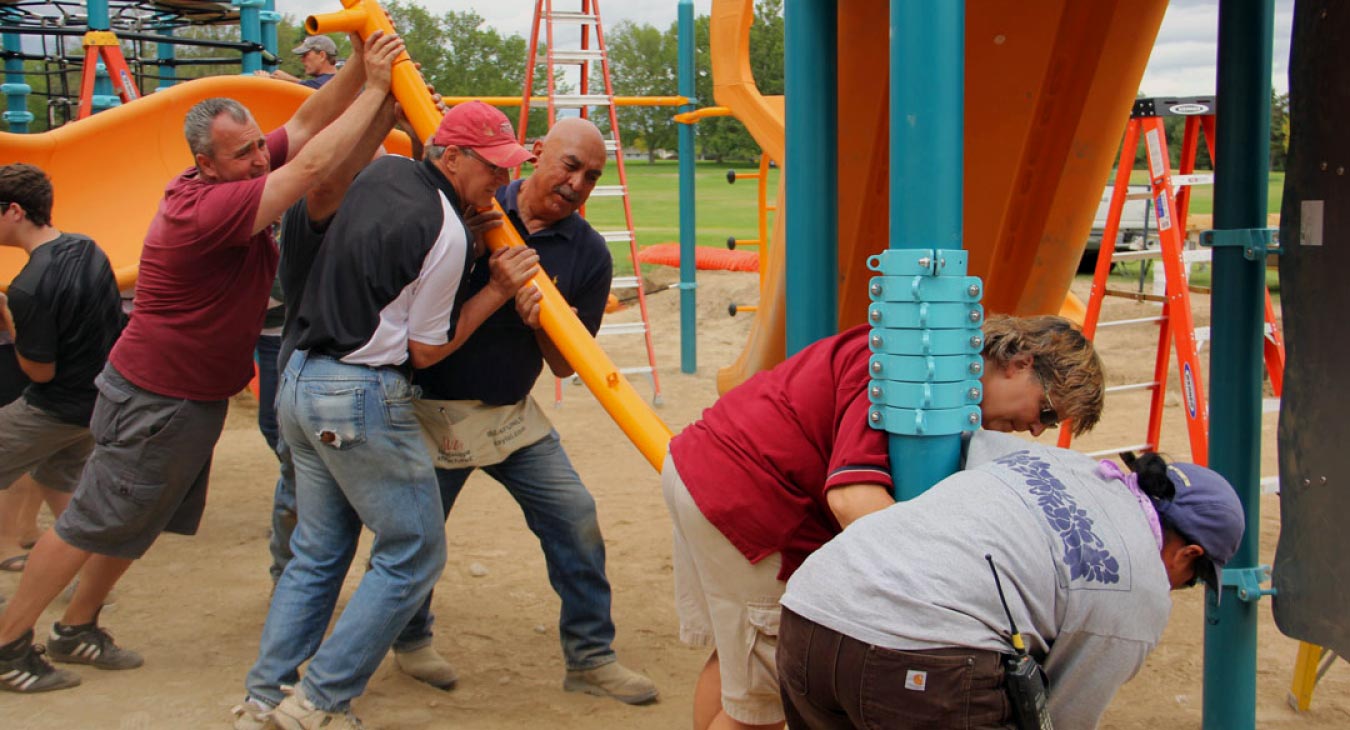
Professional installation ensures structural integrity, supports code alignment, and protects your organization from warranty voidance caused by improper setup. Installer error ranks among the most common causes of early equipment failure and liability exposure.
Choosing licensed, insured contractors is worth the additional investment for organizations with public-facing accountability.
Ongoing upkeep includes more than most buyers anticipate. Plan for these tasks every year, not just the first:
- Hardware checks and tightening
- Surfacing depth replenishment
- Seasonal cleaning
- Heat-exposure inspection of plastic components
- Rust and UV-fade assessment on metal parts
- Annual third-party safety inspection
Total cost of ownership is more than the slide's sticker price. Budget for five line items: the equipment itself, protective surfacing (often the most underestimated cost; unitary rubber carries the highest upfront price, loose-fill the lowest), professional installation, freight, and the annual inspection and maintenance above.
Surfacing and installation together can rival the cost of the equipment on taller structures, so pricing a slide without them understates the real number. We list current per-product pricing online.You can filter playground slides by price range, and professional installation is available nationwide by quote, so you can build the full figure before you commit, rather than discovering it after delivery.
Find the Right Playground Slide With WillyGoat
You've worked through the five core buying criteria: slide type, age-fit, safety features, space planning, and what ownership costs over time. That's the foundation of a purchase you can stand behind, and the kind of buyer WillyGoat loves working with.
For more than 25 years, WillyGoat has helped schools, parks, daycares, churches, HOAs, and municipalities navigate these decisions with confidence. With a wide range of products and a nationwide network of licensed, insured installation contractors, WillyGoat delivers end-to-end commercial solutions that don't leave buyers stranded once the order ships.
What sets WillyGoat apart isn't the catalog alone; it's the people behind it. Every conversation is a real one, whether you're comparing slide types, working through a site layout, or trying to stretch a fixed budget further than it looks like it can go.
No runaround, no corporate scripting; experienced guidance from a team that cares about securing the best outcome for your community. Ready to take the next step?
Browse playground slides or explore the full range of commercial playground equipment. Need personalized guidance? Connect with WillyGoat's team to find the best-fit solution for your space and budget.